


blog
Nobody Is Teaching Engineering Leadership Anymore
My thoughts on a lack of engineering leadership
 keenan johnson
 1 13
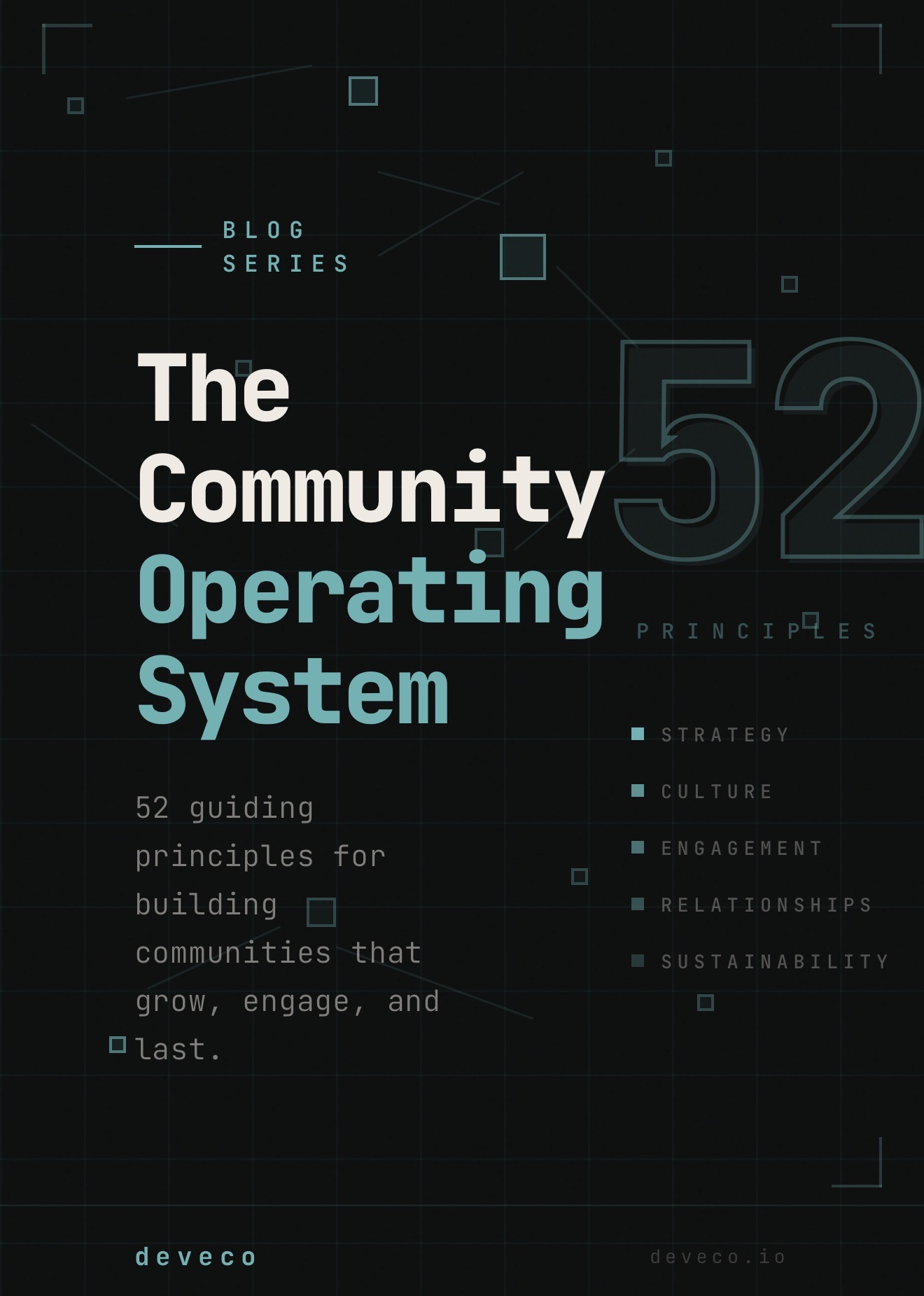
52 principles. One framework. A complete system for building communities that grow, engage, and last. This series breaks down the Community Operating System, one principle at a time.

Communities don’t fail because people stop caring. They fail because nobody designed them to succeed.
Over the past decade, I’ve built developer communities across open source organizations, startups, and global technology companies. I’ve launched communities from zero, inherited communities mid-flight, and watched promising ones collapse under their own weight. Through all of it, I kept running into the same problem: there was no shared language for how communities actually work. No operating manual. No system.
So I built one.
What is the Community Operating System?
The Community Operating System is a framework of 52 guiding principles for building, growing, and sustaining thriving communities. Each principle addresses a specific dimension of community work, from foundational strategy to long-term sustainability. Together, they form an interconnected system where decisions in one area ripple through every other.
These principles aren’t abstract theory. Every one of them was forged in real community work, shaped by real failures, and refined through years of iteration. They’re designed to be practical, actionable, and honest about the trade-offs that community builders face every day.
The Five Pillars
The 52 principles are organized into five categories that reflect the full lifecycle of community building:
Strategy & Foundation (Principles 1-14) covers the structural decisions that determine whether a community can scale. Ecosystem mapping, onboarding design, attention economics, growth mechanics, and the unglamorous work of building pipelines and portfolios that actually convert.
Culture (Principles 15-22) addresses the invisible architecture that shapes how people behave, contribute, and identify with a community. Purpose, belonging, norms, contribution models, recognition systems, and the mechanisms that make a community feel like home.
Engagement (Principles 23-36) digs into the programming, rhythms, and experiences that keep a community alive between the big moments. Content strategy, events, feedback loops, onboarding journeys, progression paths, and the operational heartbeat that sustains momentum.
Relationships (Principles 37-46) focuses on the human connections that transform a group of individuals into a network. Member-to-member dynamics, mentorship, partnerships, conflict resolution, serendipity, and the design of spaces where meaningful connections happen on purpose.
Sustainability (Principles 47-52) tackles the hardest question in community work: how do you make it last? Community capital, resilience systems, energy management, knowledge preservation, trust, and governance structures that evolve with the community they serve.
Why a Blog Series?
Each of the 52 principles deserves more than a bullet point. Over the coming weeks and months, I’ll be publishing a dedicated post for each principle, breaking down what it means, why it matters, how to apply it, common mistakes to avoid, and coaching questions to help you assess your own community through that lens.
Whether you’re a developer advocate designing your first community program, a founder trying to build a user community around your product, or a seasoned community leader looking for a framework to pressure-test your instincts, this series is for you.
How to Use This Series
You don’t need to read these in order. The principles are numbered for reference, but they’re designed to be accessed based on what you need right now. Struggling with engagement? Jump to the Engagement section. Burning out? Start with Sustainability. Every post will call out connections to other principles so you can follow the threads that matter most to your situation.
Community building is one of the most rewarding and most misunderstood disciplines in technology. The Community Operating System won’t make it easy. But it will make it intentional.
Let’s get started.
Log in to comment.
My thoughts on a lack of engineering leadership
keenan johnson
My journey to learn edge AI begins with the EDGE AI FOUNDATION Fundamentals Certification.
 HeavyFalcon678
Open Sauce is a giant two-day STEM festival for makers and creators featuring over 100 creators and 500 exhibits. This year's event showcased many crazy projects and awesome creator panels. So join me on my journey through Open Sauce 2026!
HeavyFalcon678
No comments yet. Be the first!